 CalcCommons
How to use
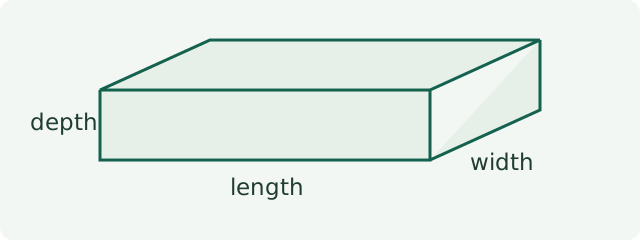
Measure length, width, and finished depth, then select their units. Use an approximate density preset or type your supplier’s density in pounds per cubic foot. Add the desired waste allowance and calculate volume and approximate weight.
For related tasks, try the Cubic Yard Calculator.
Formula & how it works
Volume = length × width × depth × (1 + waste/100). Pounds = cubic feet × density in lb/ft³. US short tons = pounds/2,000.
Worked example
Example 1
A 20 ft × 10 ft bed at 4 in depth needs 66.6667 ft³ = 2.4691 yd³ before waste. At 100 lb/ft³, that is about 6,666.67 lb or 3.3333 US tons.
Assumptions & practical notes
The default 100 lb/ft³ is a configurable planning estimate, not a measured material property. Moisture, particle size, and compaction change density.
Order by your supplier’s unit. This tool uses US short tons, not metric tonnes or long tons. Confirm whether quoted volume is loose or compacted.
See our calculation methodology for unit definitions and testing practices.
Results are estimates for planning purposes. Verify measurements, product specifications, and applicable building codes before purchasing materials or starting work.
Frequently asked questions
Can volume alone tell me the weight?
No. You also need bulk density for the material in its delivered condition.
Does waste account for compaction?
Not automatically. Ask your supplier how compaction changes the quantity needed for your desired finished depth.
Related calculators
Cubic Yard Calculator
Convert a rectangular bed, round bed, or known area and depth into cubic yards.
Mulch Calculator
Estimate mulch in cubic yards and bags for a rectangular bed, round bed, or measured area.
Concrete Calculator
Estimate concrete for slabs, pads, footings, walls, and columns, with waste, bag yield, and cost.
Square Footage Calculator
Add room areas and quantities, convert square units, and estimate cost per square foot.